
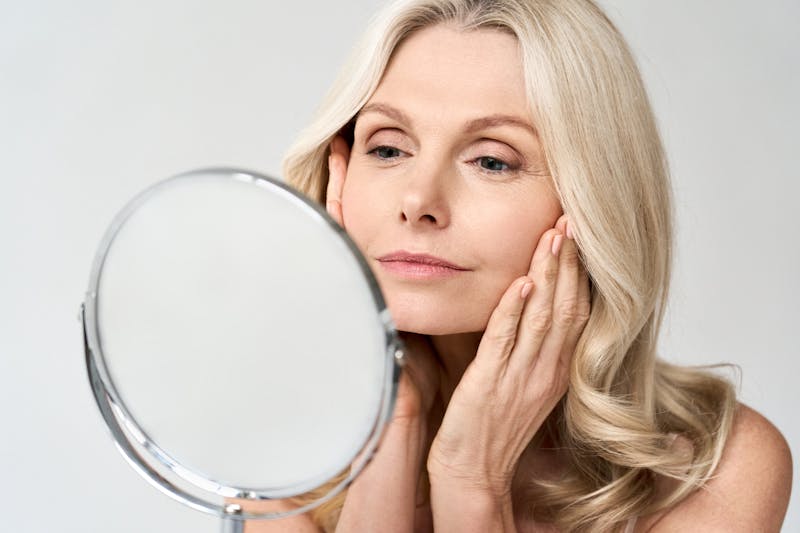
Most people think of facial aging as a skin problem: wrinkles form, things sag, and the solution is to tighten or smooth the surface. In reality, aging affects every structural layer of the face simultaneously, and understanding how each layer changes is key to understanding why certain treatments work and others fall short.
At Liebertz Plastic Surgery at Yarrow Bay in Kirkland, Dr. Daniel J. Liebertz approaches facial rejuvenation with a thorough understanding of these layered changes. Here is what is actually happening beneath the surface as the face ages.
The Skin
Skin is the layer most people notice first. Over time, collagen and elastin, which are the proteins responsible for skin's firmness and bounce, break down faster than the body can replace them. Sun exposure, environmental stress, and natural cellular slowdown all accelerate this process.
The result is skin that becomes thinner, looser, and less able to conform tightly to the structures beneath it. Fine lines deepen into wrinkles. The surface texture becomes uneven. Pigmentation changes appear. While skincare and non-surgical treatments can meaningfully address skin quality, they cannot compensate for the bigger structural changes that are happening at the same time.
The Fat
The face contains multiple distinct fat compartments, and they do not age uniformly. Some areas lose volume, like the cheeks, the temples, and the under-eye area, creating a hollowed or sunken appearance. Others descend due to the loosening of the ligaments that hold them in place, contributing to jowls along the jawline and heaviness in the lower face.
This redistribution of fat is one of the most significant and least discussed drivers of facial aging. It explains why simply adding volume with fillers can address hollowness, but does not correct the descent of fat that has shifted downward. Effective rejuvenation often requires repositioning, not just replenishing.
The Muscle
The muscles of facial expression also change with age. The SMAS, the superficial musculoaponeurotic system, a layer of muscle and connective tissue beneath the skin, gradually descends and loses tone. As it does, the overlying skin follows.
This is why a facelift that addresses only the skin tends to look pulled rather than natural. Surgeons trained specifically in facial anatomy, like Dr. Liebertz, work at the SMAS level to reposition the deeper structures, allowing the skin to re-drape naturally over a restored foundation rather than being stretched across one that has continued to descend.
The Bone
The deepest layer of facial aging is also the least visible, but its effects are far-reaching. The facial skeleton itself loses volume over time. The eye sockets enlarge slightly, contributing to a more sunken appearance around the eyes. The jaw and chin lose definition. The midface flattens as the underlying bone recedes.
These skeletal changes shift the entire foundation on which fat, muscle, and skin rest. They help explain why the face does not simply sag straight down with age but instead changes shape in ways that cannot be addressed by tightening alone.
What This Means for Treatment
Facial rejuvenation that works addresses all of these layers together. Skin resurfacing improves texture and tone. Volume restoration addresses fat loss. Surgical repositioning through procedures like a facelift corrects the descent of fat and muscle. In some cases, structural support is addressed as well.
Dr. Liebertz's dual board certification in head and neck surgery and facial plastic and reconstructive surgery reflects precisely this kind of layered understanding of facial anatomy, the foundation for results that look natural and last.
If you are considering facial rejuvenation in the Seattle area, schedule a consultation at Liebertz Plastic Surgery at Yarrow Bay in Kirkland today.